
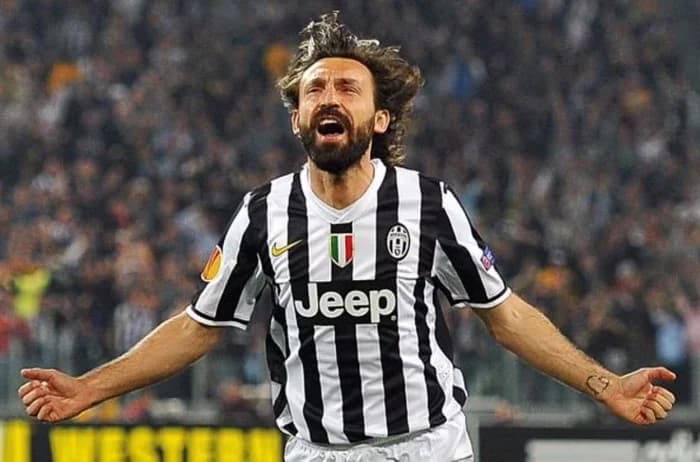
Andrea Pirlo, celebrated for his elegance and vision on the field, revolutionized the deep-lying playmaker role, leaving an indelible mark on football history.
Andrea Pirlo, born on May 19, 1979, in Flero, Italy, stands as a monumental figure in the history of football. Celebrated for his graceful playing style, he embodied elegance, intellect, and technical skill on the pitch. Pirlo’s remarkable talent as a midfielder garnered him worldwide acclaim as one of the sport's all-time greats. His abilities were characterized by extraordinary vision, precise passing, and a flair for set-pieces, especially free kicks.
Pirlo's impact went far beyond his personal skills; he transformed the role of the deep-lying playmaker. Known as 'The Architect,' he directed the rhythm of the game with his calm demeanor and spatial awareness, turning football matches into showcases of his creative brilliance.
His career began at Brescia's youth academy, where his exceptional talent allowed him to make his debut at the age of 16. He then faced difficult periods with Inter Milan and Reggina before truly finding his stride at AC Milan. During his over ten years with Milan, Pirlo became an essential part of their midfield, contributing to two UEFA Champions League titles and several domestic championships. His subsequent transfer to Juventus revitalized his career, where he guided the Turin club to four consecutive Serie A championships and helped restore their prominence in European competition.
On the international stage, Pirlo was a key player for the Italian national team. His standout moment occurred in 2006 when he played a vital role in Italy’s victory at the FIFA World Cup. His exceptional performances throughout the tournament earned him a spot in the Team of the Tournament as well as the Bronze Ball award. In addition to this achievement, he led Italy to the UEFA Euro 2012 final and competed in various other international tournaments, leaving a lasting impact with 116 caps and 13 goals.
Andrea Pirlo concluded his playing career in 2017 after a short stint with New York City FC in Major League Soccer. Following his retirement, he transitioned into coaching, starting with Juventus and extending his managerial experience with various teams in Italy, demonstrating his footballing expertise in a different role.
The legacy of Andrea Pirlo is characterized by creativity, determination, and a lasting influence on the way football is viewed and played. His name is eternally connected with the grace and artistry of the game.
Career Highlights
The career milestones of Andrea Pirlo illustrate his evolution from a promising young player to a footballing icon. He made his professional debut for Brescia in 1995, where he quickly displayed his talent, aiding the team in winning Serie B in 1997 and securing promotion to Serie A. His formative years included a transfer to Inter Milan in 1998, but it was during his loan spell at Reggina and subsequent return to Brescia in 2001 that his career took a decisive turn. At Brescia, alongside Roberto Baggio, Pirlo discovered his position as a deep-lying playmaker, a development that transformed both his career trajectory and footballing strategy.
Andrea Pirlo's move to AC Milan in 2001 signified the start of his illustrious era. Throughout this decade, he secured two Serie A championships and two UEFA Champions League titles in 2003 and 2007. His contributions during these tournaments were exceptional, especially in managing Milan’s midfield as they dominated European football. In addition, Pirlo added two UEFA Super Cups, a FIFA Club World Cup, a Coppa Italia, and a Supercoppa Italiana to his trophy cabinet, solidifying his reputation as one of the most decorated players in the history of AC Milan.
In 2011, Pirlo made a pivotal transfer to Juventus, a move that raised doubts about his capacity to maintain top-tier performance. However, he proved the skeptics wrong by guiding the Turin club to four consecutive Serie A championships. His exceptional vision, accurate passing, and leadership revitalized Juventus, transforming them into a dominant force in Italian football. During this period, he also secured an additional Coppa Italia and two Supercoppa Italiana titles. Furthermore, Pirlo's graceful presence on the field earned him numerous individual accolades, including the Serie A Footballer of the Year award and multiple selections for the Serie A Team of the Year.
Pirlo's achievements on the international stage are just as remarkable. He played a key role in Italy's success at the 2006 FIFA World Cup, showcasing pivotal performances throughout the tournament, including a standout Man of the Match performance in the final against France. Additionally, he was vital in Italy's journey to the UEFA Euro 2012 final, where his authoritative play and the memorable panenka penalty in the quarter-finals against England became legendary. Over the course of his international career, Pirlo represented Italy in numerous tournaments, including four World Cups and three European Championships, amassing 116 caps and scoring 13 goals for his country.
As his playing career came to a close, Pirlo signed with New York City FC in Major League Soccer in 2015, where he showcased his technical prowess until retiring in 2017. After hanging up his boots, Pirlo moved into management, initially taking the reins at Juventus and subsequently overseeing other teams, making further contributions to football through his tactical acumen. These key moments not only highlight Pirlo’s remarkable career but also his lasting influence on the sport.
Personal Achievements
Andrea Pirlo, celebrated for his technical brilliance and insight, received a multitude of awards that cemented his status as one of the greatest midfielders in football history. Below is a comprehensive overview of his individual accolades and achievements:
Pirlo's remarkable collection of awards highlights his impact not only within Italy but on a global scale, honoring his talent, leadership, and lasting contribution to the sport of football.
Statistics
Andrea Pirlo’s remarkable career traversed various clubs and international tournaments. Throughout his 22-year professional journey, he made 570 appearances in club matches and netted 61 goals. The majority of his playing time was spent in Serie A, where he excelled with Brescia, Inter Milan, AC Milan, and Juventus, before finishing his playing career at New York City FC in Major League Soccer.
Andrea Pirlo earned 116 caps for the Italian national team, scoring a total of 13 goals. His international achievements include being a crucial player in Italy’s victory at the 2006 FIFA World Cup, where he delivered three Man of the Match performances, and guiding Italy to the final of UEFA Euro 2012. Renowned for his accuracy in set-pieces, Pirlo successfully converted numerous free-kicks and penalties throughout his illustrious career.
Category
Statistical Value
Total Club Appearances
570
Aggregate Goals Scored in Club Matches
61
International Appearances (Italy)
116
Goals Scored for the National Team
13
Significant Accomplishments
Champion of the 2006 FIFA World Cup and runner-up in the UEFA Euro 2012
Club Achievements
2 UEFA Champions League titles, 6 Serie A championships, 1 MLS All-Star selection
Personal Honors
Named in the FIFPro World XI in 2006, awarded Serie A Footballer of the Year three times, and selected for the UEFA Team of the Year in 2012.
Resilience & Comebacks
Andrea Pirlo's career in football is characterized not only by his achievements but also by his resilience and adaptability in the face of challenges. These instances of determination further enhance his reputation as one of the most respected figures in the game.
Andrea Pirlo's early transfer to Inter Milan in 1998 presented numerous challenges. Despite his evident talent, he found it difficult to secure playing time owing to the abundance of attacking players at the club and misalignments in tactics. Following this, he had loan stints at Reggina and Brescia, where he began to reveal his potential. While at Brescia, under the guidance of Carlo Mazzone, he transformed into a deep-lying playmaker, which marked a crucial turning point in his career and set him on a new path.
Transferring to AC Milan in 2001 was a pivotal moment for Pirlo. He thrived in his new position, directing the play from midfield and guiding the Rossoneri to victories in both domestic and European competitions. This era showcased his remarkable adaptability and his ability to fully leverage his talents within an optimal framework.
In 2011, AC Milan deemed Pirlo as expendable, which led to his transfer to arch-rivals Juventus without any transfer fee. This decision did not mark the end of his career; instead, it initiated a remarkable revival. Pirlo became the cornerstone of Juventus’ midfield, leading the team to secure four straight Serie A titles and restoring his reputation as one of the premier playmakers in the world.
Pirlo’s resilience was most evident during Italy’s 2006 FIFA World Cup campaign. His performances throughout the tournament, especially in the high-stakes final against France, highlighted his composed demeanor and ability to thrive under significant pressure. Despite facing numerous challenges, Pirlo distinguished himself as one of the tournament's key players, ultimately winning the Bronze Ball award.
Making the move to Major League Soccer with New York City FC in 2015 brought new challenges for Pirlo as he had to adapt to a different style of play and a new environment. Although his physical pace had diminished, his footballing intelligence and exceptional passing ability allowed him to remain an influential player, contributing significantly to the advancement of soccer in the United States.
Throughout his career, Pirlo showcased a remarkable ability to face setbacks with calmness and emerge even stronger, which has become a defining characteristic of his legacy. His capacity to adapt, along with his tactical acumen and resolve, allowed him to succeed despite various changes in roles, teams, and challenges, positioning him as a lasting emblem of resilience in the world of football.
Legacy
The legacy of Andrea Pirlo goes beyond his impressive accomplishments on the field, representing a distinctive combination of elegance, intelligence, and creativity rare among football players throughout history. Celebrated as one of the finest midfielders ever, Pirlo redefined the role of a deep-lying playmaker, infusing artistry into a position typically linked to defensive responsibilities. His skill in controlling the rhythm of games, executing remarkable passes, and taking exquisite free kicks propelled him to legendary status.
Pirlo’s impact reaches far beyond his collection of trophies and honors; he served as an inspiration to a generation of midfielders and coaches, who viewed him as the embodiment of football elegance. He excelled in high-pressure situations, evident in his pivotal performances during the 2006 FIFA World Cup and his daring Panenka penalty against England in UEFA Euro 2012, displaying a composure that belied the significance of the moments.
His grace on the pitch transformed him into a cultural icon, garnering respect not just for his technical brilliance but also for his poise and leadership qualities. Pirlo's ability to merge tactical acumen with seamless execution set a standard for aspiring playmakers around the world. His entry into the Italian Football Hall of Fame and numerous selections in FIFA and UEFA's teams of the year highlight his lasting influence.
Even after retiring from playing, Pirlo’s influence continues to grow. As a coach, he upholds the philosophy and vision that characterized his career, sharing the knowledge and elegance that marked his time on the field. Andrea Pirlo remains a symbol of football creativity and a figure whose impact will echo through the generations.
Future Perspectives
Although Pirlo concluded his playing career in 2017, he has embarked on a managerial journey that presents new challenges. With experience coaching teams like Juventus and Sampdoria, he is steadily establishing himself as a skilled tactician. While his coaching career is still in its formative phase, his profound knowledge of the game positions him as a promising presence within the coaching landscape.
The journey of Andrea Pirlo—from a budding talent in Flero to an iconic figure in football—embodies the ideals of passion, adaptability, and skill. His legacy is set to inspire future generations.