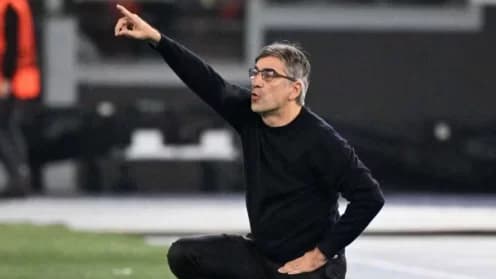
AS Roma’s turmoil highlights a lack of direction and coherence in leadership, as fans grapple with frustration amidst chaotic managerial decisions and uncertainty about the club's future beneath the Friedkin family’s stewardship.
Currently, understanding the turmoil surrounding AS Roma feels akin to piecing together a jigsaw puzzle with several pieces missing. The club's direction is marked by baffling coaching changes and poor strategic decisions that defy reason, leaving the devoted Giallorossi supporters overwhelmed with frustration. In recent weeks, the once vibrant atmosphere of the Stadio Olimpico has faded into a whisper of disbelief, as mismanagement threatens the foundational elements of this historic club.
The latest chapter in Roma's ongoing saga revolves around the firing of Ivan Juric. This action, taken following a series of disheartening defeats—a humiliating 5-1 loss to Fiorentina, a 3-2 setback against Verona, and a painful 3-2 defeat at home last Sunday—underscored the instability during Dan and Ryan Friedkin's management. Juric, who reportedly recognized that his fate was sealed, refrained from making any comments before the match and instead offered a farewell to the team after the game, signaling the unavoidable outcome.
In the wake of recent events, uncertainty remains a constant. Amidst the ongoing speculation, a clear leading candidate for the managerial position has yet to emerge. The impact of Daniele De Rossi’s departure continues to cast a long shadow—he was the coach who helped shape the team, only to be dismissed in a surprising turn of events. As Roma’s management races to find a successor, the lack of coherence in their decision-making has become strikingly evident.
In the last 48 hours, Roma’s management has engaged in what can only be termed a chaotic ‘casting call’ for potential head coaches. Various names have emerged, including Claudio Ranieri, Max Allegri, Maurizio Sarri, Roberto Mancini, and even Turkey’s Vincenzo Montella, yet a clear frontrunner remains absent. Among these candidates, Allegri and Sarri ignite the most optimism among fans, while Mancini is viewed as a reliable option. However, there is no guarantee that any of these candidates will be secured, and the clock continues to tick.
The underlying problem extends beyond simply hiring a coach—it resides in the structural weaknesses of Roma's management. The lack of a long-term strategy is evident, particularly following the exit of former CEO Lina Souloukou in late September. The Friedkins have not appointed a successor, creating a leadership void at the core of the club's operations. In the absence of a CEO to navigate administrative matters, Roma's decision-making has become unpredictable, and the consequences are felt both on the field and off.
Florent Ghisolfi, who is supposed to be Roma's chief executive, seems to have been sidelined. With major decisions being taken solely by President Dan Friedkin, doubts arise about Ghisolfi's influence—this is a troubling situation for a club that urgently requires a unified vision.
The most recent development involved the announcement that training would recommence on Thursday morning, providing players with an unusual three-day break after the loss to Bologna. However, this hiatus highlights a significant issue: Roma presently does not have a coach to conduct these training sessions. This interruption, resulting from necessity rather than a strategic choice, illustrates the confusion prevailing at Trigoria.
The decline of the Giallorossi transcends mere administration; it serves as a cautionary tale on the mismanagement of a prominent football club. The decision to part ways with De Rossi, a respected figure deeply attuned to the club’s culture, was the initial misstep. Subsequently, the choice to bring in Juric—a skilled tactician, though lacking the necessary stature for such a high-pressure role—was a poorly thought-out move. Currently, the uncertain search for a successor reveals significant cracks in Roma’s organizational structure.
For the dedicated fans of Roma, the recent weeks have been a turbulent journey of emotions. The optimism that followed De Rossi’s time in charge has now shifted to feelings of disappointment and anxiety. Each decision made by the Friedkins appears increasingly arbitrary, raising questions that go beyond just identifying the next coach. The urgent issue is how Roma, once a powerful club with ambitious goals, can find its balance amidst this leadership crisis.
The coming days are crucial. Will Roma be able to secure a capable leader to navigate the tumult, or will the mistakes keep piling up? At this moment, one fact stands out starkly: unless the Friedkins formulate a clear plan and fill the leadership gap, the challenges faced by the Giallorossi will continue, and the club's supporters will bear the consequences.