
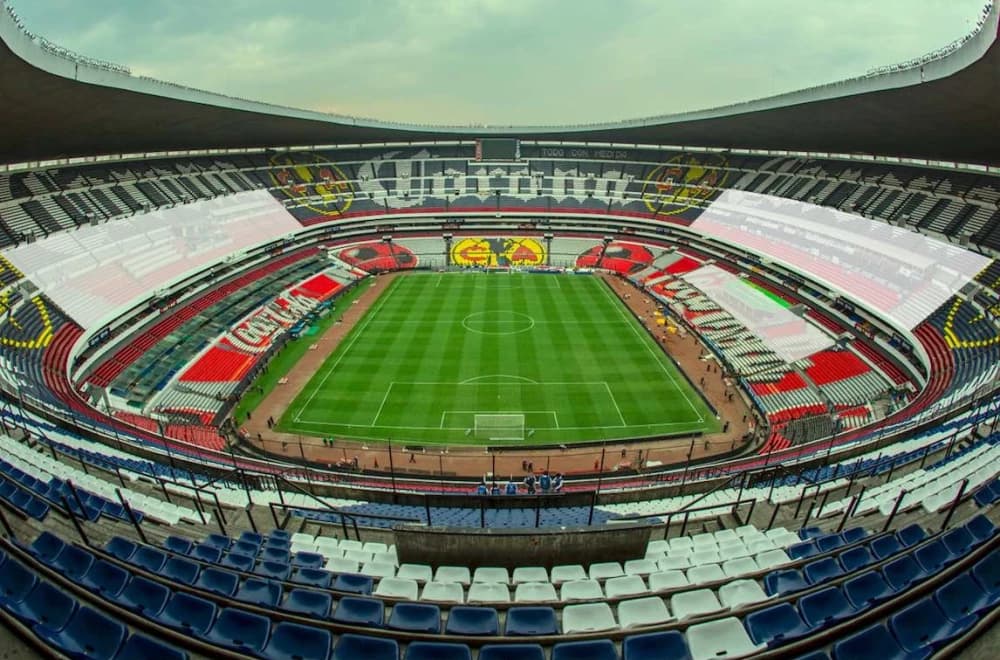
Estadio Azteca stands as a monumental landmark in football history, renowned for its rich legacy, thrilling matches, and vibrant atmosphere, making it a must-visit for sports enthusiasts.
Nestled in the lively city of Mexico City, Estadio Azteca is not only the largest football stadium in Latin America but also one of the most renowned across the globe. With the ability to accommodate 87,523 fans, it serves as a symbol of football culture, home to the prominent local team, Club América, as well as the Mexico national team. At an elevation of 2,200 meters (7,200 feet) above sea level, the stadium provides spectators with a distinct atmosphere that enhances the thrill of each match.
The stadium, designed by the esteemed architects Pedro Ramírez Vázquez and Rafael Mijares Alcérreca, broke ground in 1961 and officially opened in 1966. It swiftly became an emblem of Mexico’s dedication to sporting excellence, merging modern architectural design with the vibrant spirit of the Mexican populace.
As one of the largest and most esteemed football stadiums in the world, Estadio Azteca plays a crucial role in significant football events, surpassing its function as merely a venue. It stands as a historic site that embodies the essence of international football and the broader sports culture.
Legendary Matches
The rich legacy of Estadio Azteca is underscored by the many legendary matches that have taken place within its confines, solidifying its reputation as a footballing icon. The stadium is famous for hosting two FIFA World Cup finals, first in 1970 when Brazil overcame Italy with a score of 4–1, and again in 1986 when Argentina triumphed over West Germany 3–2. These finals have become key moments in football history, with the stadium serving as the stage for some of the most memorable events in the sport.
One of the most notable matches in the stadium's history took place during the 1986 World Cup quarterfinals, featuring Argentina against England. This game is well-remembered for Diego Maradona’s remarkable 'Hand of God' goal and the 'Goal of the Century,' both of which are among the most celebrated moments in football history. Estadio Azteca served as the backdrop for these iconic goals, further cementing its status as a venue where history unfolds.
In addition to hosting World Cup finals, the stadium has been the site of many memorable matches, including the famed 1970 semifinal between Italy and West Germany, referred to as the 'Game of the Century.' This match ended in a thrilling 4–3 victory for Italy and was witnessed by an electrified crowd, further solidifying the stadium’s reputation as a location for remarkable football moments.
Characteristics & Amenities
The architecture and facilities of Estadio Azteca distinguish it from other football stadiums worldwide. Over the years, the venue has seen numerous renovations to ensure it remains at the forefront of modern sports venues, all while preserving its historical appeal. In 2015, part of a comprehensive renovation initiative included the installation of state-of-the-art Panasonic LED panels at both the north and south ends of the stadium.
The stadium features an expansive seating arrangement that guarantees every spectator a fantastic view of the field. With the capacity to accommodate over 87,000 fans, the immense size of the venue creates an impressive atmosphere, allowing attendees to experience the excitement, whether they are sitting near the action or further up in the stands.
Beyond its seating arrangements, Estadio Azteca boasts cutting-edge facilities, which include VIP boxes, luxurious suites, and contemporary media areas, all aimed at enhancing the overall experience for fans. These amenities ensure that attendees can enjoy an exceptional view of the game while being pampered with premium services.
Significance in History
Since its inauguration, Estadio Azteca has played a pivotal role in the narrative of international football. It became the first stadium to host two FIFA World Cup finals, which firmly established its significance in the realm of global football. The finals of 1970 and 1986 are not merely important events in the tournament’s timeline; they are also monumental chapters in the sport's history, showcasing some of the most iconic footballers ever.
The stadium also played a crucial role during the 1968 Summer Olympics by hosting the football final, which further solidified its reputation as a top-tier sports venue. Beyond the realm of football, Estadio Azteca evolved into a cultural icon, hosting major events such as concerts by artists like Michael Jackson, U2, and Paul McCartney, among others, demonstrating that the stadium goes beyond its athletic origins.
For the national team of Mexico, Estadio Azteca has been a stronghold, a source of pride where significant victories have been secured. It continues to be the preferred venue for the team's most crucial matches, highlighting its significance in the cultural and historical landscape of sports in Mexico and beyond.
Future Events
As we look forward, Estadio Azteca is poised to uphold its legacy of hosting international football events, with the 2026 FIFA World Cup approaching. The stadium has been chosen to host the opening match of the tournament, marking an unprecedented third occasion it will be part of the World Cup’s history.
Besides hosting the World Cup, the stadium is set to accommodate numerous matches, which will include group stage contests and knockout rounds, as the tournament takes place across the United States, Canada, and Mexico. This represents a pivotal moment in the stadium's history, reaffirming its status as one of the leading football venues in the world.
In preparation for these upcoming events, renovations will be conducted to enhance the stadium's infrastructure, featuring improved seating and a newly renovated façade. These enhancements will ensure that Estadio Azteca remains a leading venue in global football, ready to host fans for another era of unforgettable matches.
Experience for Fans
Attending an event at Estadio Azteca is truly an exhilarating experience. This grand stadium, steeped in history and boasting breathtaking views, creates a distinctive ambiance that merges excitement, tradition, and cultural pride. Whether fans are cheering for Club América against their competitors or watching the national team perform on the global stage, they are immersed in an electrifying atmosphere that is hard to find in any other stadium.
This venue has been thoughtfully designed with fans in mind, featuring a variety of amenities to enhance the matchday experience. The stadium includes many food and drink options, merchandise kiosks, and fan engagement areas where supporters can immerse themselves in the team's heritage before the game begins.
For attendees at international events, the atmosphere becomes even more electrifying, as fans from around the globe unite to witness moments of history. Estadio Azteca’s capability to host a variety of both sports and cultural events establishes it as a truly remarkable venue, where the experience transcends the game itself.